You already have the story idea. What you need is the system that turns it into 1000+ episodes.
Most writers do not fail because their imagination runs out. They fail because nobody ever showed them how a long-running series is actually built — premise, arcs, mini-arcs, episodes, hooks and cliffhangers. This eBook shows you, step by step, in simple English.
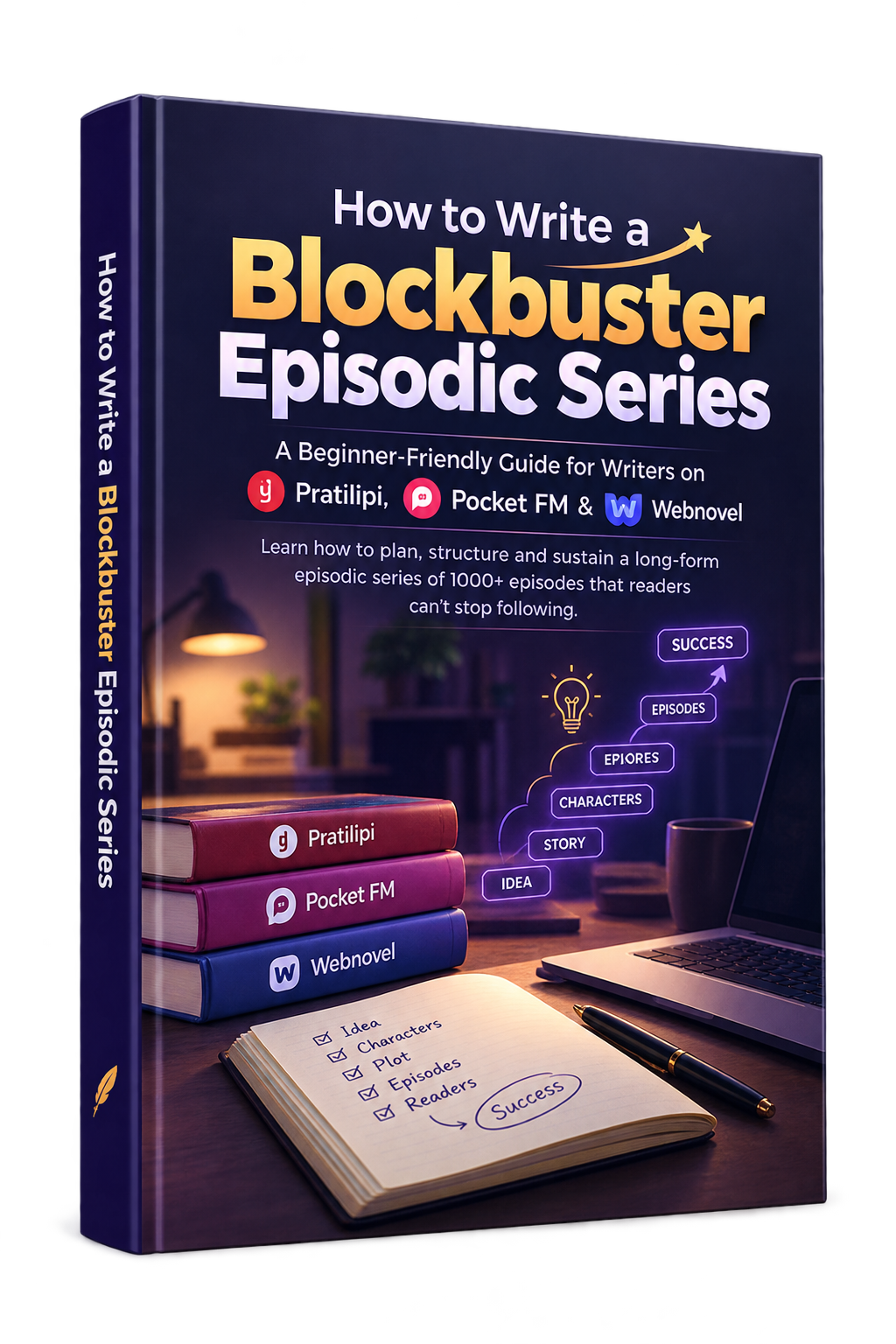
Instant digital access after successful payment
- ✓12 chapters, written for complete beginners — no degree, no writing background needed
- ✓The Saga → Arc → Mini-Arc → Episode planning method
- ✓3 ready-to-use templates: Episode Outline, Character Bible, Arc Planner
- ✓Platform-specific guidance for Pratilipi, Pocket FM and Webnovel
Does this sound familiar?
The idea is in your head. It just never makes it past episode twelve.
You open the app, you read a series with 800 parts, and you think: I could write something like this. Then you sit down and everything gets stuck.
"I have a story idea, but I honestly don't know how to begin."
"I write a few episodes and then I get completely stuck."
"How do I stretch one story across hundreds of parts without it becoming boring?"
"My episodes end flat. I don't know how to write a real cliffhanger."
"By episode 200 I'll forget my own characters and contradict myself."
"I start with energy, then miss a week, then stop posting altogether."
"Pratilipi, Pocket FM, Webnovel — I don't know how they are different or which one suits me."
None of this is a talent problem. It is a structure problem — and structure can be learnt.
The big idea
A 1000-episode series is not a long short story. It runs on a story engine.
A premise built for one novel usually runs out of conflict somewhere around episode 50 to 100. A premise built for a blockbuster has something inside it that keeps generating new problems on its own — a revenge, a hidden identity, a forbidden relationship, a secret power that must stay hidden. Every solved problem creates the next one.
Once you have that engine, the rest is architecture. The book takes you down the ladder, one layer at a time.
The spark you already have.
A premise that keeps making new conflict.
The shape of the ending you are moving toward.
40–150 episodes with its own beginning and end.
5–10 episodes rising to a small climax.
Hook → Development → Cliffhanger. Today's work.
What's inside
Twelve chapters. Three templates. One complete framework.
Every chapter ends with मुख्य बातें — the key takeaways summarised in Hindi.
What Is a "Blockbuster Episodic Series"?
Why these stories are measured in hundreds of hours, and why consistency beats "perfect writing".
Know Your Platform — Pratilipi vs Pocket FM vs Webnovel
What each platform rewards, what it pays for, and where a beginner should start.
Choosing a Premise and Genre That Can Run for 1000+ Episodes
The "story engine" test, six proven genres, and the one-line premise formula.
Designing Characters Who Can Carry a Long Series
Goals, wounds and flaws that keep producing conflict — plus when to introduce new faces.
The Architecture of a Never-Ending Story
The four-layer method — saga, arc, mini-arc, episode — and the planning rhythm that follows it.
Anatomy of a Perfect Episode — Hook, Development, Cliffhanger
The three-part episode, platform-wise episode lengths, and why every episode needs a title.
Writing Style for Serial Fiction — Language, Dialogue, POV
Everyday spoken language, close third person, and dialogue that works when read aloud.
Planning Tools — Templates You Can Use Today
Story Bible, Arc Tracker, Episode Outline and the episode buffer that protects your schedule.
Publishing Rhythm — Consistency Without Burnout
A routine of 30–45 minutes a day, fixed release days, and how to avoid burning out.
Growing Your Readership and Earning From Your Series
Promotion, reader engagement, and the earning routes that exist on these platforms.
Common Mistakes That Kill Long Series
Ten failure patterns, from planning all 1000 episodes upfront to giving up after a slow start.
Recommended Courses & Resources to Keep Improving
Platform-specific and general craft resources, free and paid, and how to use them without stalling.
Episode Outline Template
Character Bible Template
Arc Planner for a Long-Running Saga
Chapter 2, in brief
Three platforms. Three different ways to write.
This is not generic writing advice. Everything is built around how these platforms actually work.
Pratilipi
Text · Hindi & Indian languages
- Format
- Text-based long series; readers follow the author and return for the next part.
- Best suited for
- Romance, drama, suspense, horror, crime-thriller in Indian languages.
- Publishing rhythm
- Aim for at least 3 parts a week; "Live Serial" lets you commit publicly to a schedule.
- Earning routes
- Subscriptions for premium parts, contests such as the Super Writer programme, and IP licensing for standout series.
Pocket FM
Audio · narrated aloud
- Format
- You write text, but it is narrated in a single voice — everything must work by ear.
- Writing considerations
- No screenplay format. Simple spoken language. The first 3 episodes decide everything.
- Structure
- Small conflict and a hook in every episode; a bigger conflict roughly every 10.
- Genres that trend
- Romance, crime, suspense, thriller, motivational, horror.
Webnovel
Chapters · global, English
- Format
- Chapter-based reading with a culture of daily or near-daily releases.
- Best suited for
- Fantasy, romance, system/progression fantasy and reincarnation genres.
- Chapter length
- Roughly 1,000–2,500 words, grouped into arcs of 40–200 chapters.
- Growth depends on
- Frequent updates, chapter-ending hooks, and a clear sense of progress inside each arc.
The 1000+ episode framework
Stop trying to plan a thousand episodes. Plan four layers instead.
The single biggest reason new writers abandon a long series is that they try to plan the entire thing before writing episode one. Professional serial writers work in layers, and only ever outline a few episodes in detail at a time.
One line: who wants what, against whom, and why it will take long. You only need the shape of the ending.
An enemy defeated, a secret revealed, a relationship resolved. Ties up some threads while opening new ones, so readers feel real progress.
A problem appears, escalates and reaches a mini-climax — roughly the rhythm platforms recommend to their writers.
Its own small conflict, resolved or escalated, plus a hook into tomorrow. This is the only thing you have to write today.
Outline your first arc. Break it into mini-arcs. Detail only the next 5–10 episodes at any time. When an arc nears its end, build the next one from the threads you deliberately left loose.
Chapter 6
The three moves that make a reader tap "next episode".
If the saga is the skeleton, the episode is the heartbeat. Readers decide whether to continue one episode at a time.
Hook
Open with conflict, a striking image, an emotional gut-punch, or the unanswered question from yesterday's cliffhanger. Never with slow scene-setting.
Development
A decision, a discovery, a confrontation, a piece of new information. Every scene either moves the plot or reveals character — cut anything that does neither.
Cliffhanger
A reveal, a threat, a twist, an interrupted moment. This single line usually decides whether the reader comes back tomorrow.
Included templates
Not just theory. Three planning sheets you can copy today.
They live in the appendices of the eBook. Copy them into a notebook, a Google Doc or Excel — no expensive software needed.
Episode Outline
Two minutes before you write. Saves hours of rewriting.
- Episode number & title
- Hook (opening line/moment)
- Main development
- Characters featured
- Cliffhanger
- Connects to arc
Character Bible
One per major character, so you never contradict yourself 400 episodes in.
- Name & role in story
- Physical appearance
- Personality & key flaw
- External goal
- Internal wound / motivation
- Secrets, relationships, arc
Arc Planner
Track the big picture without planning every episode in advance.
- Arc number
- Episode range
- Central conflict
- How it resolves
- Loose threads left behind
The opportunity
Serialised storytelling isn't only a hobby anymore.
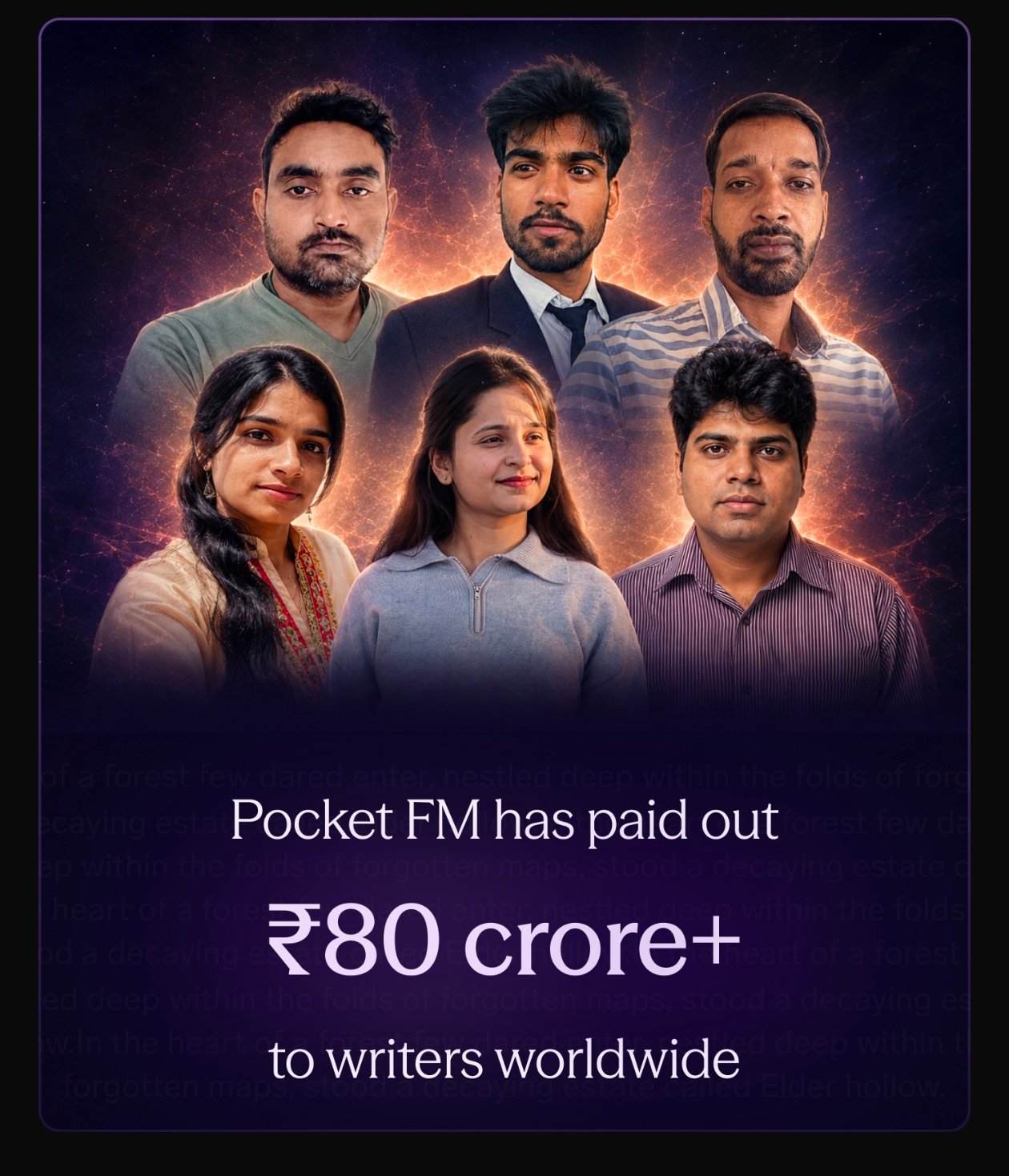
Audio and reading platforms have grown into a real market for episodic writers, and some of them publish what they have paid out. That does not tell you what you will earn. It does tell you that an audience and a payment model exist.
Real writer stories show what is possible
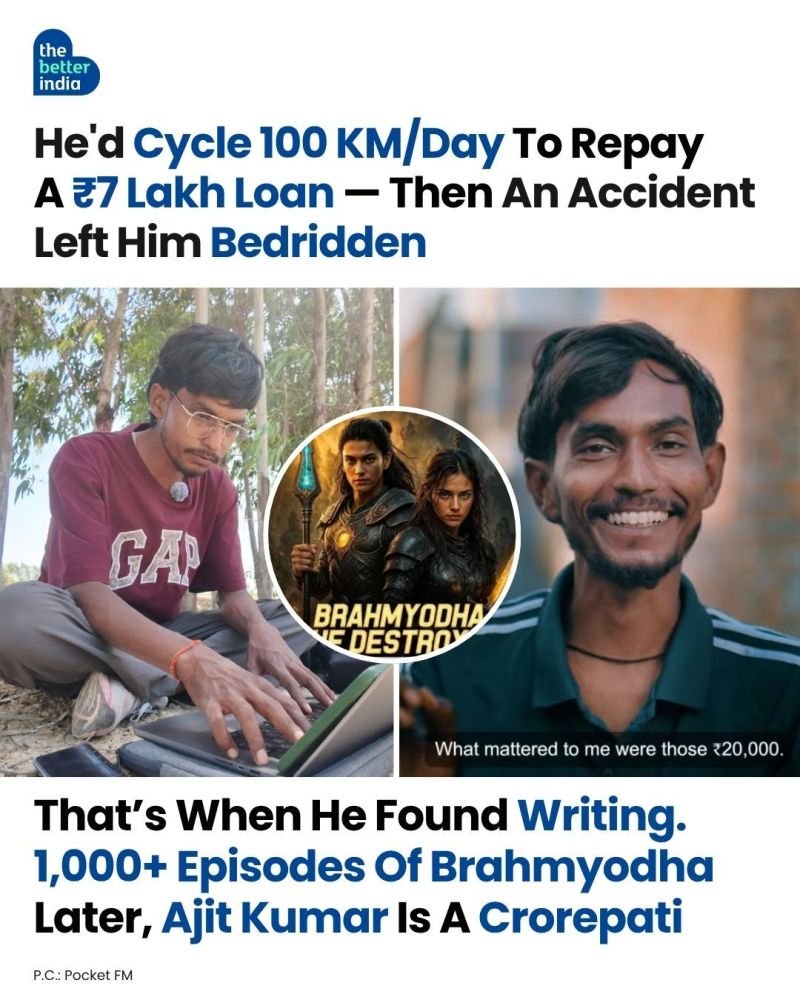
Stories from working writers show what can happen when writing meets consistency, audience demand and the right platform. Ajit Kumar's series crossed 1,000+ episodes before it changed anything for him. That number is the point: this is a long game, built one episode at a time.
This eBook is for you if…
- ✓You have a story idea but don't know how to structure it.
- ✓You want to write long-form episodic fiction, not one-off short stories.
- ✓You want to understand how Pratilipi, Pocket FM and Webnovel differ.
- ✓You struggle to write hooks and cliffhangers that pull readers forward.
- ✓You want a framework for planning characters and story arcs.
- ✓You want to build a publishing habit you can actually keep.
- ✓You want to understand how writers can potentially earn from serialised fiction.
It is honestly not for you if…
- ✗You are looking for guaranteed income.
- ✗You want a shortcut that does not involve writing.
- ✗You don't want to practise and improve over months.
- ✗You expect one book to automatically create a successful series for you.
The book is a framework and a set of planning tools. The episodes still have to be written by you.
Before & after
What changes once you work through the book.
- "I have an idea."
- "I don't know how to start."
- "I get stuck after a few episodes."
- "I can't structure a long story."
- "I don't understand the platform differences."
- "I can't stay consistent."
- "I understand how episodic storytelling works."
- "I know how to test my premise for a story engine."
- "I can structure saga → arcs → mini-arcs → episodes."
- "I know how to build hooks and cliffhangers."
- "I have planning templates I actually use."
- "I have a rhythm I can keep without burning out."
What the book cannot promise is readership or income. Those depend on your writing, your consistency and how your audience responds.
Your story is still sitting in your head.
Maybe it's time to put it on the page.
You don't need to know everything before you begin. You need a story idea, a system, and the discipline to keep going. Start building your episodic series today.
₹199 one-time · Instant digital access after successful payment · 20-page PDF
Questions writers ask before buying
Is this suitable for complete beginners?
Yes. It is written for people who have never written fiction before. Every chapter uses simple English, and the key points of each chapter are also summarised in Hindi.
Do I need a literature degree or previous writing experience?
No. The book states this plainly: you need a story idea, patience, and a system to follow. It gives you the system.
Which platforms does it cover?
Pratilipi, Pocket FM and Webnovel. Chapter 2 compares their formats, suitable genres, publishing rhythms and earning routes, and helps you choose where to start.
Is it useful for Hindi writers?
Yes. The main text is in simple English, and every chapter closes with मुख्य बातें — its key takeaways in Hindi. The Pratilipi and Pocket FM guidance is written with Hindi and Indian-language writers in mind.
Does it really teach how to write 1000+ episodes?
It teaches the structure that makes that length possible: a premise with a built-in engine, a saga broken into arcs of 40–150 episodes, mini-arcs of 5–10, and a three-part episode. It explicitly tells you not to plan all 1000 episodes in advance.
Does it include practical templates?
Three, in the appendices: an Episode Outline, a Character Bible, and an Arc Planner. They are printed in the eBook for you to copy into your own document or notebook.
Can I use the framework for genres other than romance?
Yes. The book covers romance, revenge-and-rise, family drama, crime and suspense, horror and supernatural, and motivational underdog stories, plus fantasy and progression genres on Webnovel. The structure is the same across all of them.
Does the book guarantee income?
No. The eBook provides a practical framework for writing and publishing serialised fiction, but earnings are never guaranteed and depend on factors such as story quality, consistency, audience, platform performance and other circumstances.
What does it cost, and how do I receive it?
₹199, one time. After a successful payment you are taken straight to a thank-you page with your download link, so you can save the PDF immediately.
Results disclaimer
This eBook is an educational resource. It does not guarantee readership, publishing acceptance, platform monetisation, income, or any specific financial result. Writer earnings and outcomes vary based on factors including writing quality, consistency, audience response, platform policies, content performance and other factors.
The earnings and media images shown on this page are reproduced for informational and social-proof purposes only. They describe outcomes reported by a platform and by media coverage of an individual writer. They are not typical results, not a promise of earnings, and not attributed to this eBook. Pratilipi, Pocket FM and Webnovel are independent platforms and are not affiliated with, and do not endorse, this eBook.